Reports
Over the years, we have published multiple reports and white papers presenting learnings and insights of our extensive research work.
Overview
Our latest reports (2025) cover seven main research areas:
Offshore technologies and design of hubs/clusters
- Whitepaper: Offshore Energy Clusters
- Report: Storylines and blueprints for the integration of three NSE hubs
- Report: Technical Innovation
Societal value and business cases for offshore system integration
- Whitepaper: Offshore energy system value and business cases
- Report: Public Value Assessment of Offshore System integration
- Report: Business models for value chains for new offshore energy concepts
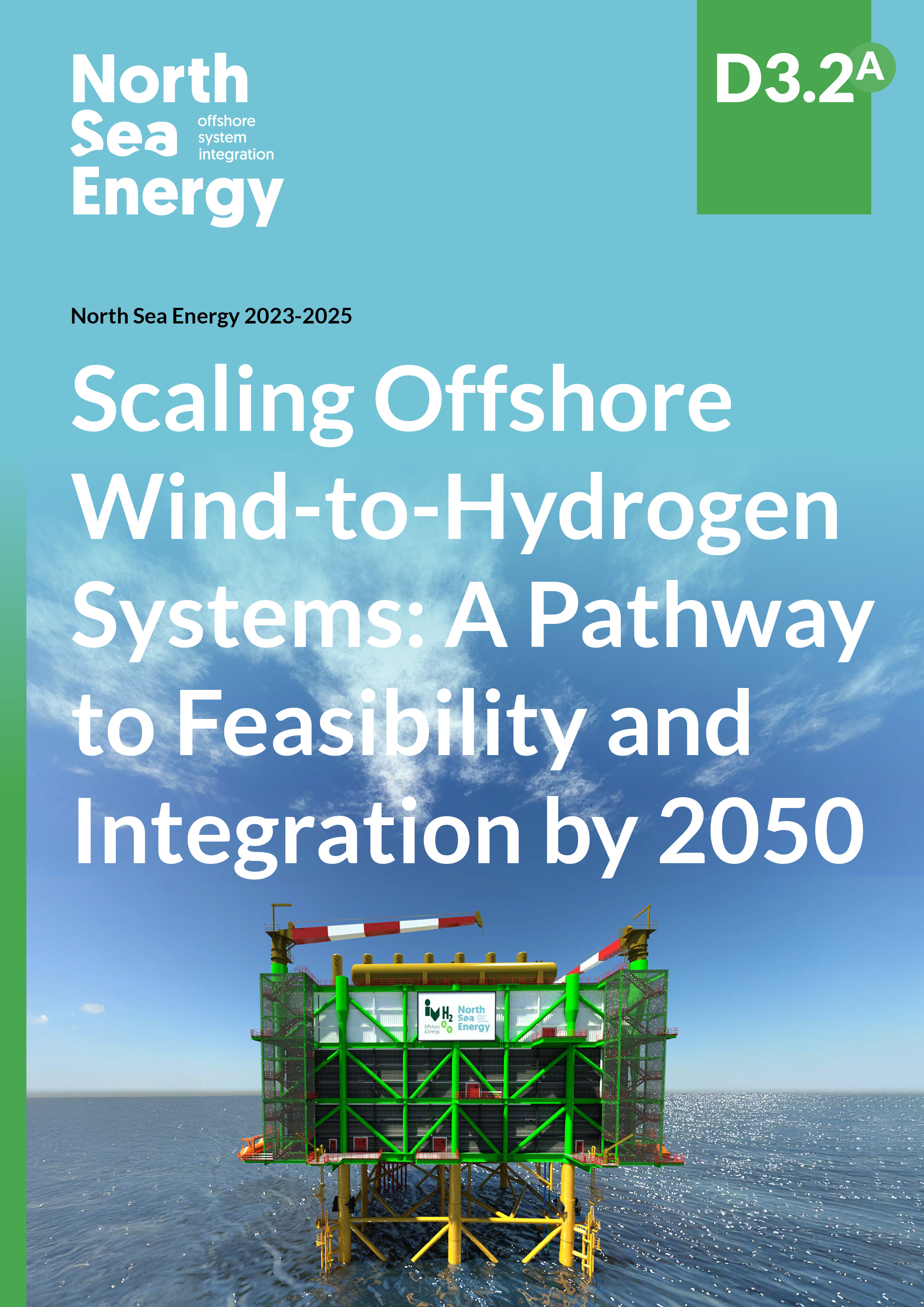
- Report: Scaling offshore wind to hydrogen systems
- Report: Business case assessment for the offshore value chain
North Sea energy scenarios for the Netherlands (online results) Roadmaps for the Netherlands and Europe
- Roadmap: Empowering and decarbonizing the Netherlands
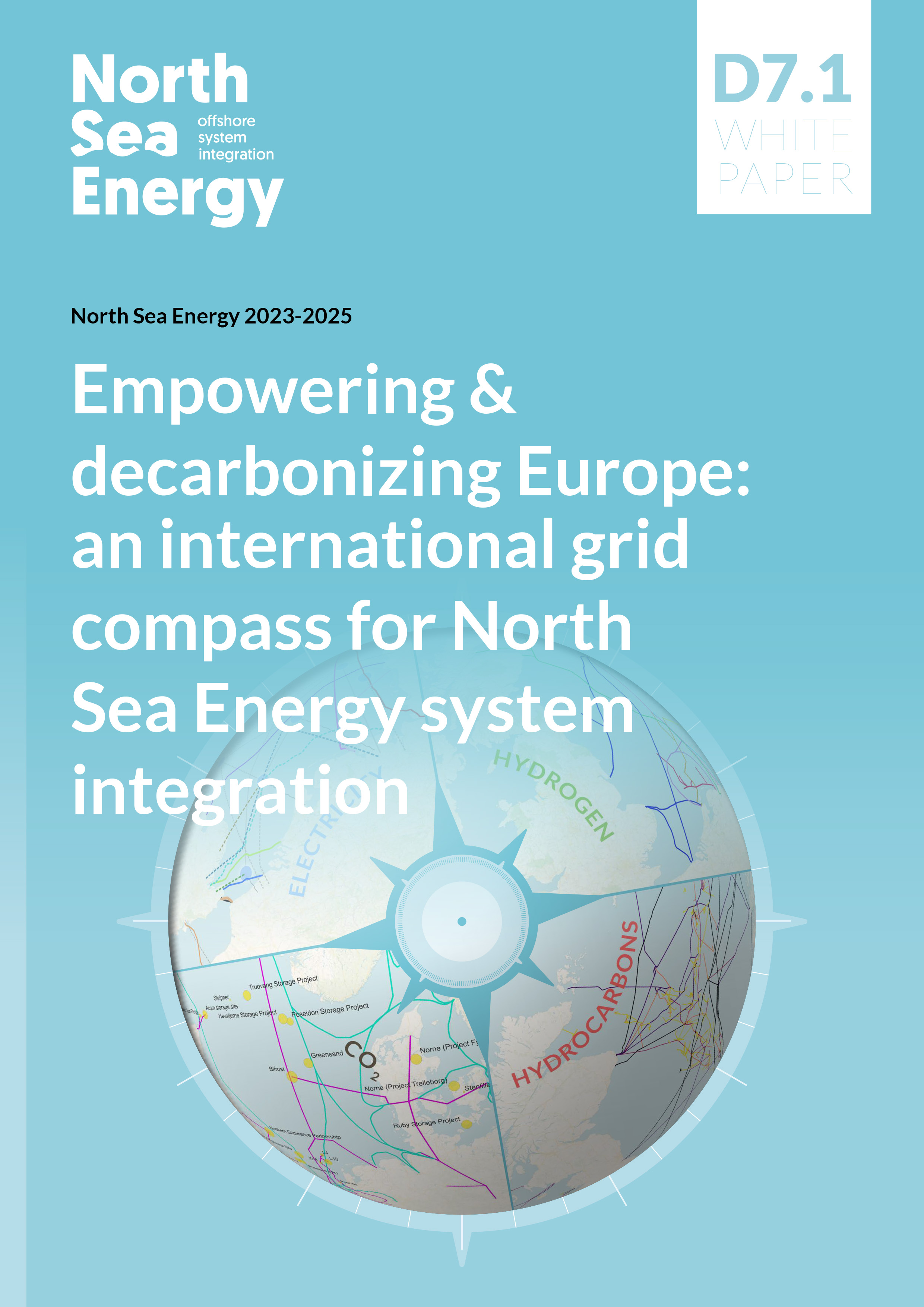
- Roadmap: Empowering and decarbonizing Europe
- Whitepaper: International North Sea collaboration
- Report: Dossiers North Sea basin energy transition & infra
Society, Governance and Communications
- Whitepaper: Best practices in stakeholder engagement
- Report: Navigating systematic barriers and enablers offshore wind transport
- Report: Practical guidance for developing a stakeholder management strategy in offshore energy
- Report: Human capital agenda
Environment, Ecology and critical Materials
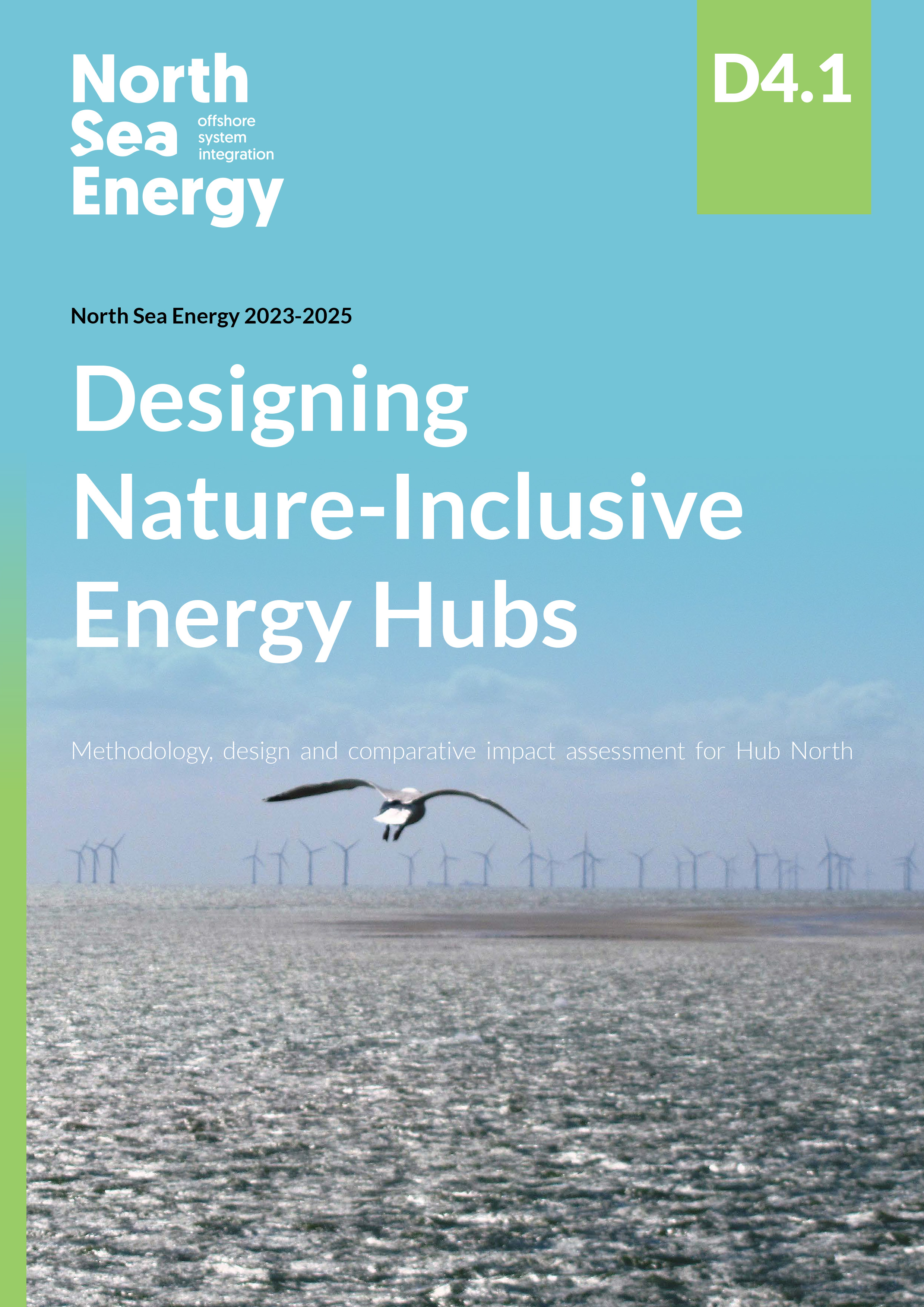
- Whitepaper: Designing Nature inclusive energy hubs
- Report: Designing nature inclusive energy hubs
- Report: Carbon footprint of floating solar
- Report: Comparing embedded carbon for central and decentral offshore hydrogen
- Report: Material flow analysis and Criticality assessment
Spatial challenge North Sea
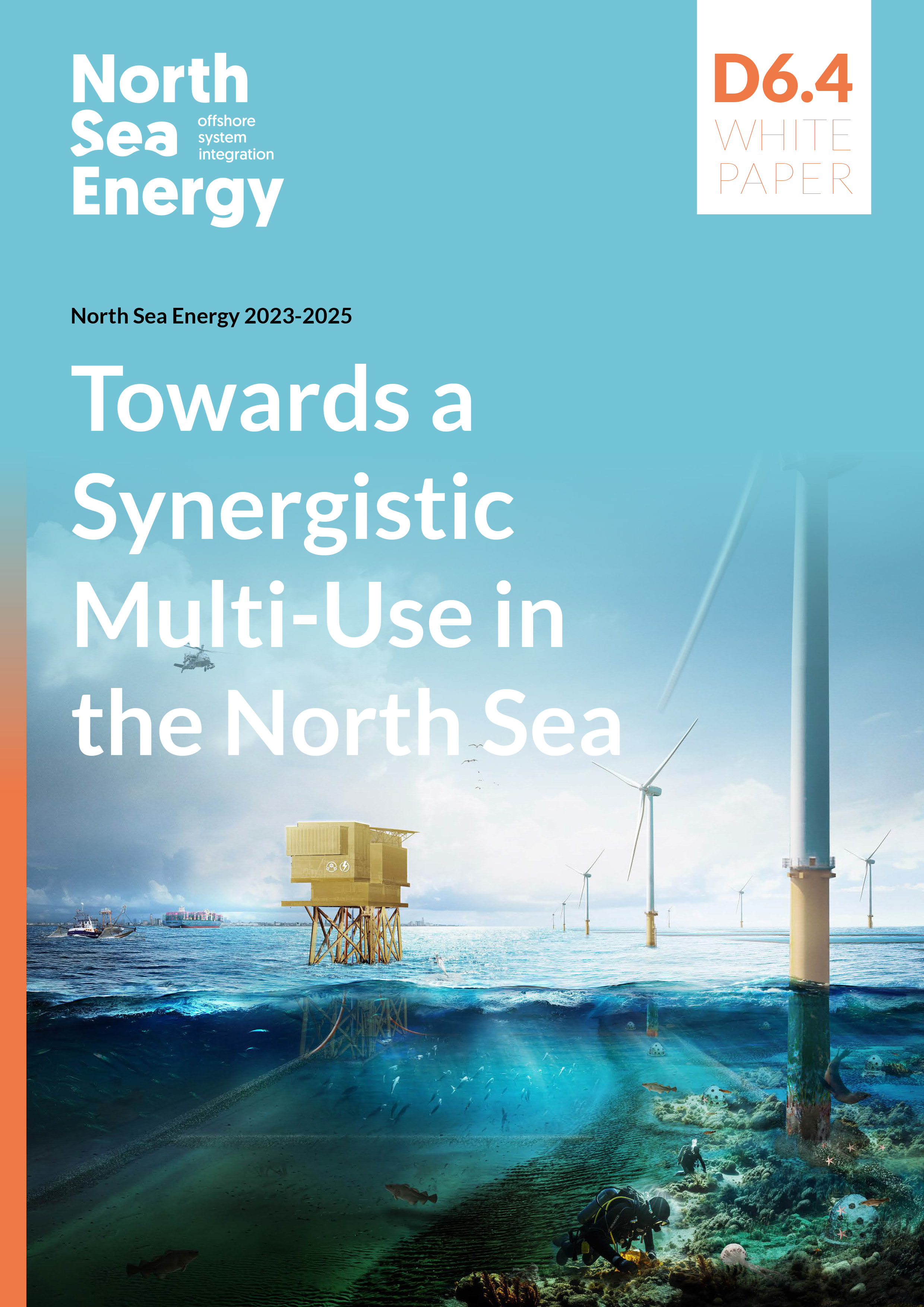
- Whitepaper: Towards a synergetic multi-use in the North Sea
- North Sea Energy Atlas
North Sea Energy Data and tools
- Whitepaper: Unlocking data sharing potential in the North Sea
- North Sea Energy Atlas
- North Sea energy scenarios for the Netherlands (online results)
- North Sea Energy Mapeditor (ESDL)
- North Sea Energy data repository
- North Sea Energy Wake model
2025
In 2023-2025 we explored innovative concepts for offshore energy production, conversion, transport and storage with three virtual offshore energy hubs and clusters as a starting point. The key role of the North Sea towards an independent and affordable energy system, was brought together in a unique visualisation and modelling of energy plans. The unique series of maps and scenarios show just how crucial offshore wind, hydrogen production, CO₂ storage, and the phase-out of natural gas are for the future of the Netherlands and Europe.
A series of 15 reports and 6 white papers offer insight and call for action from the Netherlands and other North Sea countries.
A set of 2 Roadmap papers outline exploratory pathways towards empowering and decarbonizing Europe and The Netherlands, as a compass for North Sea energy system integration.
Storylines and blueprints for the integration of three NSE hubs in the future energy system of The Netherlands and the North Sea
In this report spatially explicit development pathways are mapped for three Dutch offshore energy hubs: Hub West, Hub East and Hub North. The report shows how offshore wind, hydrogen production, CO₂ storage, natural gas production and transport infrastructure could evolve towards 2050. Its strength lies in making the North Sea energy transition tangible: ambition is translated into infrastructure, costs, spatial claims, ecological limits and hard choices about how the North Sea can function as an integrated energy system.
Offshore Energy Clusters: Stepping Stones towards a Sustainable, Resilient and Cost-Effective North Sea Energy System
Offshore energy clusters are introduced as building blocks for an integrated North Sea energy system. These clusters combine production, conversion, storage and transport of electricity, hydrogen, natural gas and CO₂ in one spatial and infrastructural logic. The report shows how clusters can improve the use of renewable energy, reduce infrastructure costs, lower spatial pressure and strengthen security of supply. For policymakers, the message is strategic: the North Sea should be designed as a system, not as a series of separate projects.
Technical Innovation
Technical assumptions behind the North Sea Energy models are brought together in one transparent overview. The report covers technologies for production, conversion, storage and transport, including offshore wind, floating solar, green and blue hydrogen, batteries, CO₂ storage, HVDC transmission, hydrogen pipelines and compression. Its value lies in showing the numbers underneath the scenarios: costs, technical limits, performance assumptions and uncertainties. Anyone interpreting model outcomes needs this report to understand what the calculations actually rest on.
Practical guidance for developing a stakeholder engagement strategy in offshore energy projects
In this report, stakeholder engagement is translated into a practical step-by-step approach for offshore energy projects. The guide helps teams define objectives, identify stakeholders, analyse interests and concerns, choose an engagement strategy, plan activities and adjust along the way. It also maps key North Sea stakeholder groups, including energy companies, infrastructure operators, policymakers, environmental organisations and fisheries. The value lies in treating public support not as repair work afterwards, but as something to design from the start.
Best practices in stakeholder engagement for offshore energy projects
International cases in wind, CCS and energy islands are used to identify what effective stakeholder engagement looks like in innovative offshore energy projects. Offshore projects may be less visible than onshore developments, but that does not make them less sensitive. Public opinion is often still unformed, which creates both risk and opportunity. The main lesson is practical: early engagement, transparency, flexibility and a strong link with spatial planning are essential for building legitimacy.
Human Capital agenda for offshore energy system integration
The offshore energy transition is discussed not only as a technical or financial challenge, but also as a labour market challenge. The report maps future workforce needs, skills and bottlenecks for offshore wind, hydrogen, CCS and decommissioning. The estimated demand of 104,000 to 226,000 FTE between 2025 and 2050 shows the scale of the issue. The challenge is not only numbers, but new competencies in system integration, digitalisation, circularity, geology and ecology.
Navigating Systematic Barriers and Enablers of the Dutch Offshore Wind Transition
The complexity of scaling offshore wind in the Dutch North Sea is analysed through systems thinking, interviews, workshops and causal loop diagrams. Barriers and enablers are mapped across wind development, spatial pressure, ecological quality, fisheries, fossil infrastructure and onshore energy demand. The conclusion is sharp: accelerating offshore wind requires more than turbines. It demands shared governance, ecosystem-based planning and a broader transformation of the onshore energy system.
Public Value Assessment of Offshore System Integration
The societal value of offshore system integration is assessed, with a focus on combining offshore wind and hydrogen production. System optimisation and market modelling are used to explore how offshore electrolysis may reduce cable costs, grid congestion, curtailment and spatial pressure on land. The findings are nuanced: offshore hydrogen can lower societal costs and improve energy landing options, but financial benefits remain uncertain and depend strongly on cost development, wind profiles and market design.
Business models for value chains for new offshore energy concepts
New offshore energy value chains require new forms of cooperation and revenue sharing. The report explores dependencies between wind farms, electrolysers, hydrogen transport, storage, offtakers, financiers and government. It shows that risks before investment decisions are substantial: technology, demand, regulation, grid costs, ecology and financing are all uncertain. As a result, joint business models, risk sharing, integrated tenders and active public-sector roles become increasingly important.
Scaling Offshore Wind-to-Hydrogen Systems: A Pathway to Feasibility and Integration by 2050
The business case for offshore wind-to-hydrogen is analysed through Demo 2: a roughly 500 MW electrolyser near Ten Noorden van de Waddeneilanden. The report examines how grid connection, electrolyser size, electricity prices, hydrogen prices, CAPEX, subsidies and tariffs affect feasibility. The message is realistic: around 2030 the business case remains difficult, but towards 2050 offshore hydrogen can become more competitive if costs fall and policy provides price certainty.
Business case assessment for the offshore value chain
Business cases for offshore wind, electrolysis, offshore solar, hydrogen offtake, transport and storage are quantified from a project developer perspective. The report shows where unprofitable gaps emerge and why societal system value does not automatically lead to investable projects. The analysis is blunt: offshore wind faces price pressure, electrolysis remains expensive, offshore solar must become much cheaper and hydrogen storage requires political choices. Without policy, risk sharing and cost reduction, the value chain stalls.
Offshore Energy System Value and Business Cases: Aligning Project Decisions with Societal Objectives
Public system value and private business cases do not automatically point in the same direction. This white paper examines three friction points: the financial feasibility of offshore wind, the choice between onshore and offshore electrolysis, and the cost and use of electricity connections. The central policy message is clear: without smart market design and targeted incentives, project developers will not necessarily make decisions that are best for society as a whole.
Designing Nature-Inclusive Energy Hubs: Methodology, design and comparative impact assessment for Hub North
In this report a nature-inclusive spatial design for Hub North is developed and compared with a standard design. The area is ecologically sensitive, with high biodiversity, seasonal stratification and important seabird routes. The design seeks to avoid vulnerable zones, maintain bird connectivity and concentrate disturbance where possible. The conclusion remains cautious: large-scale energy infrastructure will have serious ecological effects, making monitoring, adaptive policy and continued knowledge development essential.
Designing Nature-Inclusive Energy Hubs: Whitepaper on General Recommendations and Outcomes for Hub North
Key lessons from the nature-inclusive design trajectory for Hub North are translated into practical recommendations for planners, developers and policymakers. The white paper stresses the need to gather ecological information, consider both local and regional effects, apply the mitigation hierarchy, coordinate with other sea users and build monitoring and learning into the process. Nature-inclusive design is positioned not as decoration afterwards, but as a starting point for spatial choices at sea.
Carbon Footprint of Floating Solar
Life cycle emissions of different offshore floating solar designs in the North Sea are compared. Structures above sea level, near sea level and membrane-ring concepts are assessed in steel and aluminium. The most important finding is concrete: construction materials dominate the carbon footprint, followed by PV panels and fuel use. Aluminium performs significantly worse than steel, even when recycled material is included. The report offers direct input for low-carbon design choices.
Comparing embedded carbon for central and decentral offshore hydrogen
Embedded carbon emissions of central and decentral offshore hydrogen production are compared. In the central model, electricity from wind farms is transported to larger electrolyser platforms; in the decentral model, electrolysis takes place at individual turbines. The result is surprisingly sober: differences in material-related carbon footprint are small, because wind turbines and steel use dominate total impact. Choices around lifetime, maintenance, cables, pipelines and secondary steel may be more decisive than the basic configuration.
Material Flow Analysis and Criticality Assessment
Material flows and critical raw materials are analysed for the North Sea energy transition towards 2050. A dynamic stock model maps material demand for offshore wind, floating solar, hydrogen production, natural gas, CCS and infrastructure. The strategic conclusion is important: circular flows from decommissioned installations will only cover a limited part of new material demand. Primary materials, critical metals and geopolitically vulnerable supply chains remain hard constraints on the energy transition.
Unlocking Data Sharing Potential in the North Sea Through Digitalization
Data sharing is presented as a key accelerator for collaboration, efficiency and innovation across the North Sea. The white paper focuses on digital techniques such as federated learning, secure multi-party computation, homomorphic encryption and data spaces, allowing parties to use data without giving up ownership or privacy. The report is particularly relevant because better data exchange can directly support logistics, maintenance, ecology, grid flexibility, permitting and decommissioning.
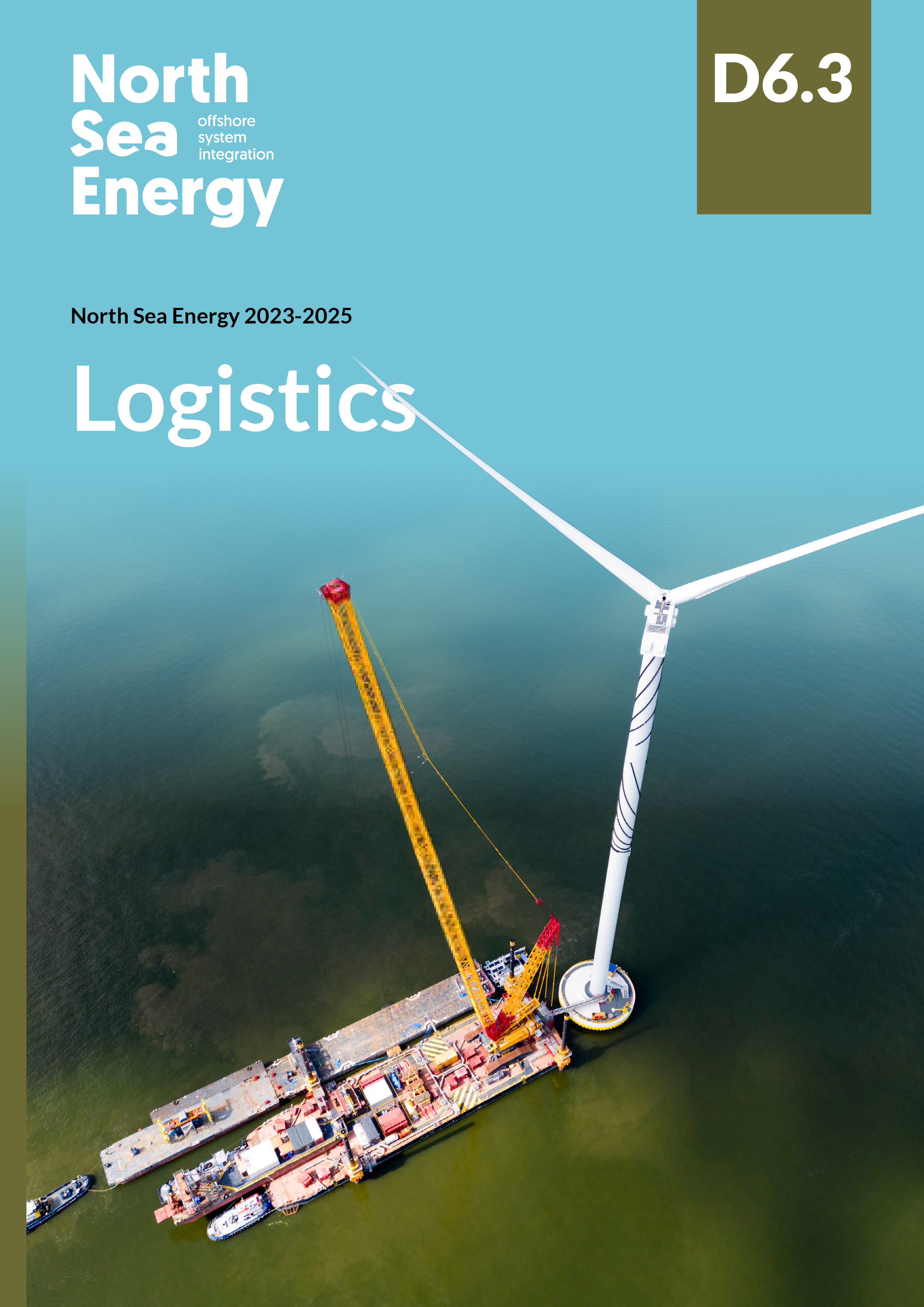
Logistics
Offshore system integration is analysed from a logistics perspective for Hub West, Hub East and Hub North. The report shows how shared operations and maintenance between wind farms, hydrogen production and gas platforms can reduce vessel movements, emissions and charter costs. At the same time, it warns that too much logistical synergy can reduce wind farm availability. The next step lies in automation, robotics, data sharing and smarter maintenance strategies.
Towards a Synergistic Multi-Use in the North Sea
Multiple uses of the North Sea — energy, nature, fisheries, shipping, military zones and protected areas — are examined through the lens of spatial synergy. The white paper distinguishes between simple co-location and truly synergistic multi-use, where activities reinforce each other or reduce negative impacts. Multi-use already occurs widely, especially in the southern North Sea, but policy, design and governance are needed to turn spatial necessity into spatial quality.
Dossier files — Empowering & decarbonizing Europe: an international grid compass for North Sea Energy system integration
Electricity, hydrogen, CO₂ and natural gas are mapped as interconnected energy carriers in the future North Sea system. The dossier provides the underlying analysis for the international grid compass, covering the current situation, ambitions, infrastructure pathways towards 2050 and required actions. Its strength lies in its breadth: the North Sea can no longer be planned by sector or by country. Timing, cross-border infrastructure, asset reuse and shared governance become decisive.
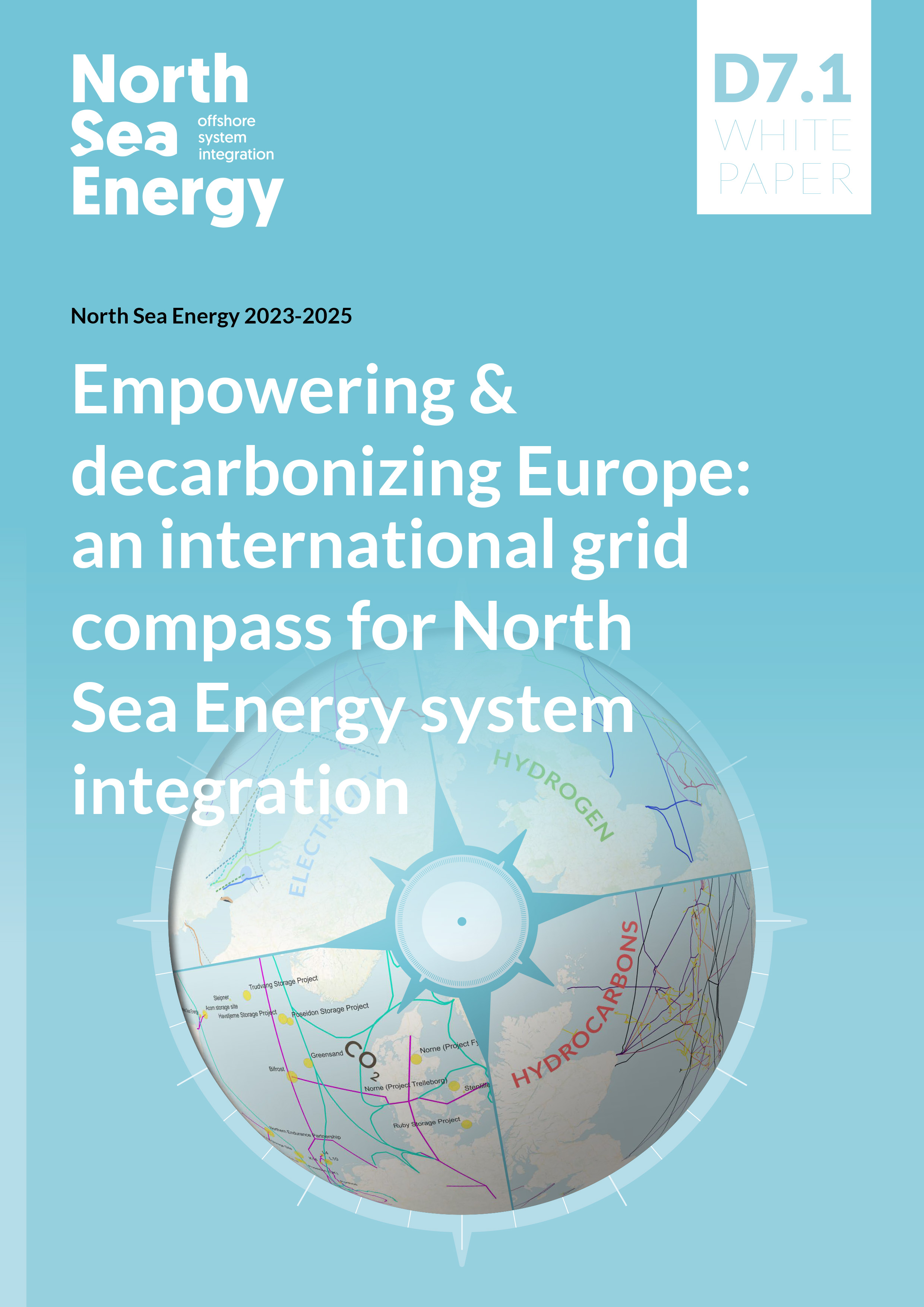
Empowering & decarbonizing Europe: an international grid compass for North Sea Energy system integration
The international North Sea energy transition is translated into a concrete action agenda for electricity, hydrogen, CO₂ and natural gas. These energy carriers cannot be developed separately: market formation, infrastructure planning, storage, pipeline reuse and international connections directly influence each other. The central warning is strong: without integrated vision, standardisation, cost sharing and cross-border governance, the North Sea risks becoming a patchwork of national projects.
Empowering & decarbonizing the Netherlands: a national North Sea Energy compass
The Dutch role in the North Sea energy transition is translated into development pathways towards 2050 for offshore wind, hydrogen, CO₂ storage, natural gas and other marine energy sources. The report shows where the national challenge becomes difficult: spatial pressure, ecological limits, lagging demand for low-carbon energy, rising costs and uncertainty about revenue models. Its value lies in making system integration nationally concrete: what must the Netherlands do to use the North Sea affordably, reliably and climate-neutrally?
International North Sea Collaboration: from buzzword to concrete actions
International collaboration is taken out of the realm of good intentions and made operational. The report asks who should do what, at which level, under what governance and through which existing or new forms of cooperation. A ladder of transnational collaboration is used to organise North Sea initiatives, from knowledge exchange to formal joint institutions. The conclusion is relevant for policymakers: collaboration is abundant, but a truly binding and integrated North Sea approach is still missing.
NSE Nature-inclusive hub design Workshop 1 - report
Ecological risks, design opportunities and dilemmas around offshore energy hubs are explored through the first workshop on nature-inclusive hub design. Participants discuss Hub West, Hub North and Hub East, focusing on cumulative impacts, fisheries pressure, artificial islands versus platforms, rewilding, species protection and spatial choices. The report is especially useful because it shows how technical energy planning immediately raises a deeper question: what kind of North Sea nature should be protected, restored or allowed to emerge?
North Sea Energy Nature-inclusive hub design Workshop 2 - report
Hub North is used as a case to explore nature-inclusive offshore design in more detail. Participants apply the Seawilding Approach and discuss current ecological conditions, constraints, opportunities and possible design interventions. The report shows how much uncertainty remains around the effects of wind farms, hydrogen production, brine, heat, noise and hard substrate. At the same time, a clear direction emerges: plan adaptively, monitor early, concentrate disturbance where possible and treat ecology as a design condition from the beginning.
North Sea Energy Nature-inclusive hub design Workshop 3 - report
In the concept results for the nature-inclusive design and qualitative impact assessment of Hub North are discussed and refined. Participants focus on the bird corridor, stratification, hydrogen platforms, floating solar, monitoring, cumulative effects and the definition of nature-inclusive design itself. The report makes clear that nature-inclusive design is not a single add-on measure, but an iterative process of measuring, designing, testing and adapting. The policy lesson is direct: start earlier, monitor better and plan adaptively.

Find what matters to you
North Sea Energy brings together years of research, insights and expertise. But finding the information that matters to your question — and turning it into something you can actually use — can take time.
BINDit helps you collect relevant insights and sources in your own BINDer, add a policy perspective and adapt the result to the language and level of your audience.
2022
In 2022 the programme focussed on an integrated vision and roadmap to unlock the North Sea’s climate-neutral energy potential while optimising its value for society and nature. The reports from the studies provide information on the current role and future potential of energy supply, transportation, demand, conversion, and storage in the North Sea.
To provide policymakers, project developers and society clarity and certainty about the pathways leading there, the North Sea Energy Roadmap was developed. To enhance actions in the short term, the Action Agenda for all North Sea stakeholders was created.
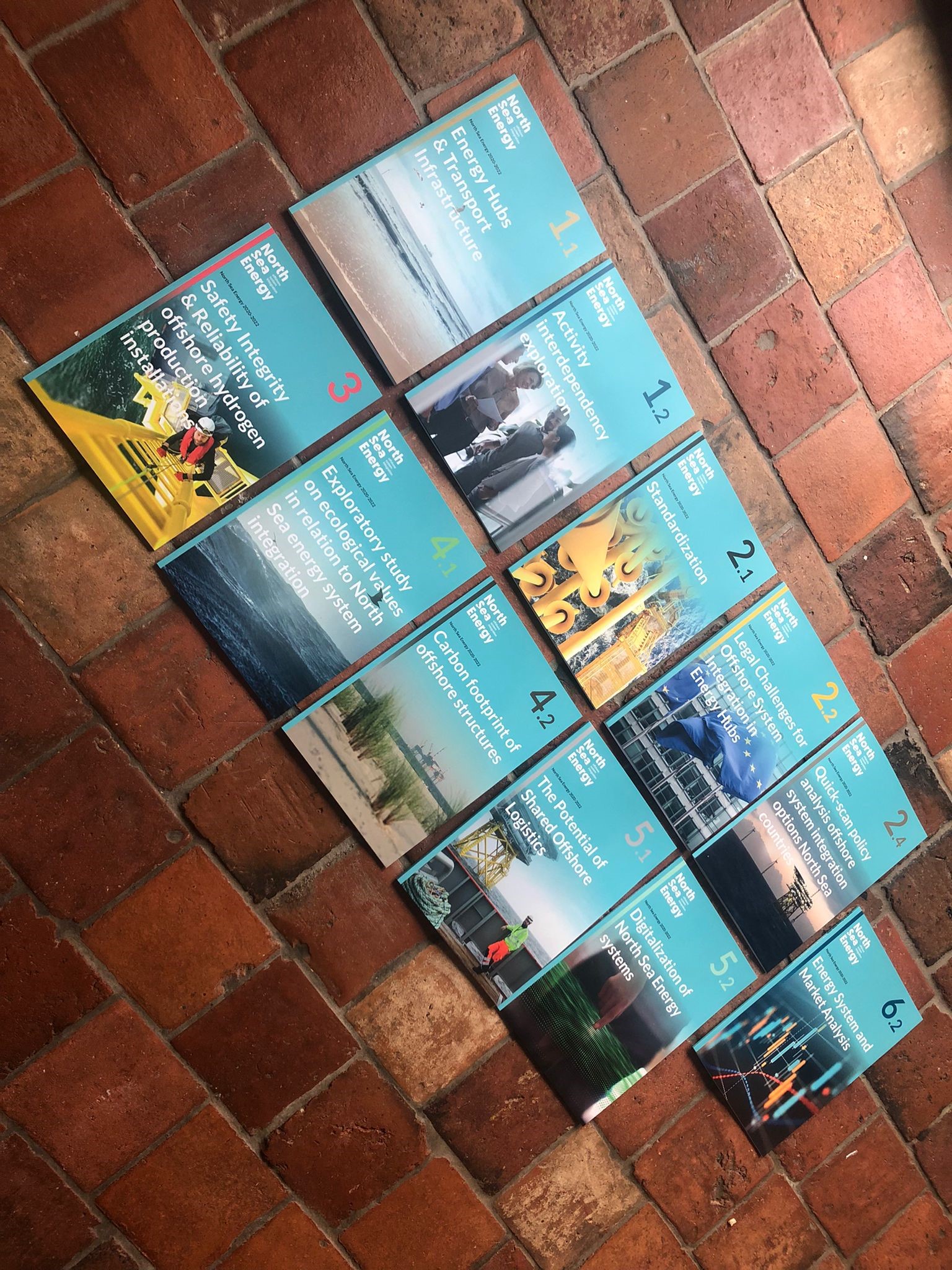
Energy Hubs & Transport Infrastructure
Offshore energy hubs are developed as concrete spatial clusters where wind energy, hydrogen production, CO₂ storage, natural gas, electrification and transport infrastructure come together. Hub West, Hub East and Hub North are designed as an early attempt to make system integration practical in the Dutch North Sea. The value lies in combining vision with calculation: what infrastructure is needed, what will it cost, which existing assets can be reused and where do hard dependencies arise?
Activity interdependency exploration
System integration in the North Sea can stall when actors wait for each other. This analysis identifies which activities, decisions and information needs depend on each other across offshore wind, hydrogen, CO₂ storage, gas infrastructure and energy hubs. A Design Structure Matrix turns complex dependencies into manageable insight. The five cases are especially valuable because they show where first-mover risks arise and which decisions must be taken early to enable acceleration.
Standardization
Standards determine whether new offshore energy systems become safe, reliable, interoperable and scalable. The analysis explores which national, European and international standards already apply to multi-use offshore energy structures, and where gaps emerge around hydrogen, CO₂ transport, platform reuse and new hub functions. For policymakers and industry, the report is a sober but important reminder: innovation requires not only technology, but also timely standardisation.
Legal Challenges for Offshore System Integration in Energy Hubs
Energy hubs fit poorly into a legal system still largely organised by energy carrier and activity type. The report examines how international law, EU law and national legislation deal with platform electrification, offshore hydrogen production and CCS, with specific attention to the Netherlands, the United Kingdom, Denmark and Germany. The core insight is sharp: reuse, multi-use and cross-border infrastructure require legal frameworks that focus on systems and installations, not only separate energy sources.
Quick-scan policy analysis offshore system integration options North Sea countries
Offshore system integration policy varies strongly across North Sea countries. This quick scan compares strategic visions and policy lines in Belgium, Denmark, Germany and the Netherlands around offshore wind, hydrogen, CCS and platform electrification. The document is explicitly a snapshot from summer 2021, before the energy crisis following Russia’s invasion of Ukraine. That makes it useful: it shows which ambitions already existed, where policy gaps remained and how quickly the context changed afterwards.
Safety Integrity & Reliability of offshore hydrogen production installations
Large-scale offshore hydrogen production introduces new safety questions around hydrogen, oxygen, existing platform structures and venting scenarios. The study builds on earlier HAZID results and translates risks into design questions for platforms and islands. Effect distances for accidental hydrogen and oxygen releases are calculated, including vent stack heights and platform layout. The conclusion is practical: the risks can be designed for, but require early attention in engineering, standards and reuse decisions.
Exploratory study on ecological values in relation to North Sea energy system integration
Ecological values need to be included earlier and more concretely in spatial planning for energy hubs. The study gathers available spatial data on benthos, harbour porpoises and seabirds and translates these into layers for the NSE Atlas. It also explores methods for assessing the ecological value of existing offshore structures. A key insight is that current data are not yet sufficient to determine which hub location is ecologically preferable.
Carbon footprint of offshore structures
Climate impacts of offshore structures are compared for platforms, sand islands and hybrid islands that could support large-scale hydrogen production and other hub functions. Carbon footprints are relatively close, but dominant sources differ: steel production for platforms and fuel use for sand islands. The choice is therefore not simply platform versus island, but a design question. Recycled steel, cleaner installation fuels and smarter material choices can significantly reduce impact.
The Potential of Shared Offshore Logistics
Shared logistics between offshore wind and oil and gas platforms can reduce costs, emissions and vessel movements. The study models scenarios for Hub West and Hub East, including CTV, SOV and island-based maintenance models. Potential savings reach tens of millions of euros per year at hub level. The report also shows that logistics becomes a system condition: ports, data sharing, maintenance planning and vessel strategies partly determine whether offshore integration remains feasible.
Digitalization of North Sea Energy systems
In this report digitalisation is presented as a necessary accelerator for an integrated North Sea energy system. The report discusses digital twins, big data, sensors, IIoT, robotics, cybersecurity, data sharing and autonomous inspection. A case using TNO’s PyDOLPHIN shows how digital models can support sizing and operational decisions. The message is clear: without digital infrastructure, maintenance, forecasting, optimisation and safe collaboration between offshore assets remain too slow and fragmented.
Energy System and Market Analysis
Market dynamics determine whether offshore system integration becomes economically viable. Using the I-ELGAS model, the study analyses electricity, hydrogen and methane in combination, including scenarios based on TYNDP, II3050 and REPowerEU. The results provide insight into future prices, dispatch, import needs and the role of offshore hubs in the wider North Sea system. The key value lies in linking technical hub choices with market reality: infrastructure works only when demand, supply and price logic move together.
2021
In 2021, as in between results, we published a report on stakeholder perceptions.
As a partner in the program, MSG Sustainable Strategies performed an extensive analysis of Dutch stakeholders’ views, concerns, needs and potential benefits related to North Sea system integration and specific integration options, such as reuse, CCS and hydrogen in particular.
Drawing on seven international cases and insights from NSE partners, this whitepaper identifies best practices for projects such as CCS, hydrogen production, and energy hubs.
Social embedding of North Sea energy system integration — A stakeholder analysis
Social embedding can either accelerate offshore system integration or block it. The stakeholder analysis maps Dutch stakeholder interests, concerns and information needs around reuse, CCS, hydrogen and energy hubs. There is shared support for large-scale offshore wind, reducing spatial pressure and building a common knowledge base. Disagreements arise around national self-sufficiency, blue hydrogen, the societal value of reuse and the role of CCS. Early stakeholder engagement is therefore not a side issue, but a condition for progress.
2019 – 2020
In this phase we researched if and how an integrated approach and the interconnection of energy functions in the North Sea can unlock potential benefits: significant cost savings and substantial CO2-emissions reduction, a more efficient use of space in the North Sea, and accelerate the transition towards a low-carbon energy future.
Unlocking potential of the North Sea — Interim Program Findings June 2020
This synergy report, positions the North Sea as a key area for an affordable, reliable and climate-neutral energy system. The publication brings together interim insights on offshore wind, CCS, hydrogen, platform electrification, power-to-X, energy islands and storage. The message is broad but sharp: system integration creates value, but only with strong coordination between sectors, countries and stakeholders. The coming decade is decisive for demonstrations, market incentives, infrastructure choices and a fair balance between energy, nature and space.
Updated data-set description of the North Sea Energy Atlas
The North Sea Energy Atlas is updated with a better interface, a more flexible database and new map layers for offshore energy planning. The atlas is expanded with data on hydrogen transport capacity, subsurface energy storage, wind tender areas towards 2050 and international data for Norway, Denmark and the United Kingdom. The practical core is clear: better spatial data should help make system integration, policy choices and conflicting sea uses more visible and discussable.
D1.5 Aligning NSE 3 with the CCUS roadmap
CCS is positioned as a necessary and cost-effective route to quickly reduce industrial CO₂ emissions, especially where alternatives are still lacking. The analysis connects Dutch initiatives such as Porthos, Athos and Aramis with broader North Sea developments around storage capacity, platform electrification, blue hydrogen and reuse of oil and gas infrastructure. The key warning is that storage capacity is sufficient, but annual injection rates, timing and international infrastructure planning require much sharper coordination.
Stakeholder perception research on Platform Electrification
Platform electrification is technically promising, but still barely known by the wider public. Using Q-methodology, the study maps stakeholder perceptions around economics, technology, policy, communication, system integration, environment and nature. The results are useful for anyone seeking public support: there are many positive arguments, but concerns about public value, ecosystem impact, spatial pressure and the position of the oil and gas sector can carry significant weight. Early, visual and honest communication is crucial.
Technical assessment of Hydrogen transport, compression, processing offshore
Reuse of existing offshore gas infrastructure for hydrogen is technically possible, but requires careful assessment per component. The study examines pipelines, compressors, gas turbines, gas engines and flow meters. No clear showstoppers are found for offshore pipelines, provided inspections confirm assumptions about material condition and defects. Compressors, turbines and metering equipment require more attention due to material compatibility, leakage, fluctuating gas mixtures and missing metrological approval for 100% hydrogen.
Energy transport and energy carriers — Report incl. deliverables D3.2–D3.6
Offshore wind can be transported to shore not only as electricity, but also converted into hydrogen, ammonia or methanol. The study compares conventional energy transport with power-to-X options, including spatial needs, technical requirements and business cases. Large energy islands emerge as logical locations for bulk production of carbon-free molecules, while small-scale platform conversion appears economically weaker. The bottleneck lies less in technology than in policy, market development, CO₂ sourcing and cost reduction.
Value of a coordinated offshore power grid for offshore energy sectors
A shared offshore electricity grid can make platform electrification and wind development cheaper and more strategic than individual cables per platform. The analysis compares individual connections with a coordinated grid around IJmuiden Ver, including scenarios for electrification, CO₂ storage and combinations of both. Cable investment savings reach 54–66% per platform. This comes with greater organisational complexity: cost sharing, ownership, security of supply and central coordination become decisive.
2018
In 2018 we investigated what happens when bringing offshore system integration together as a pathway to address two major North Sea challenges simultaneously: the rapid expansion of offshore wind and the decommissioning of oil and gas infrastructure.
We looked at it from various functions, energy developments and perspectives: platform electrification, power-to-hydrogen, CCS, infrastructure reuse, environmental impacts, and regulatory frameworks.
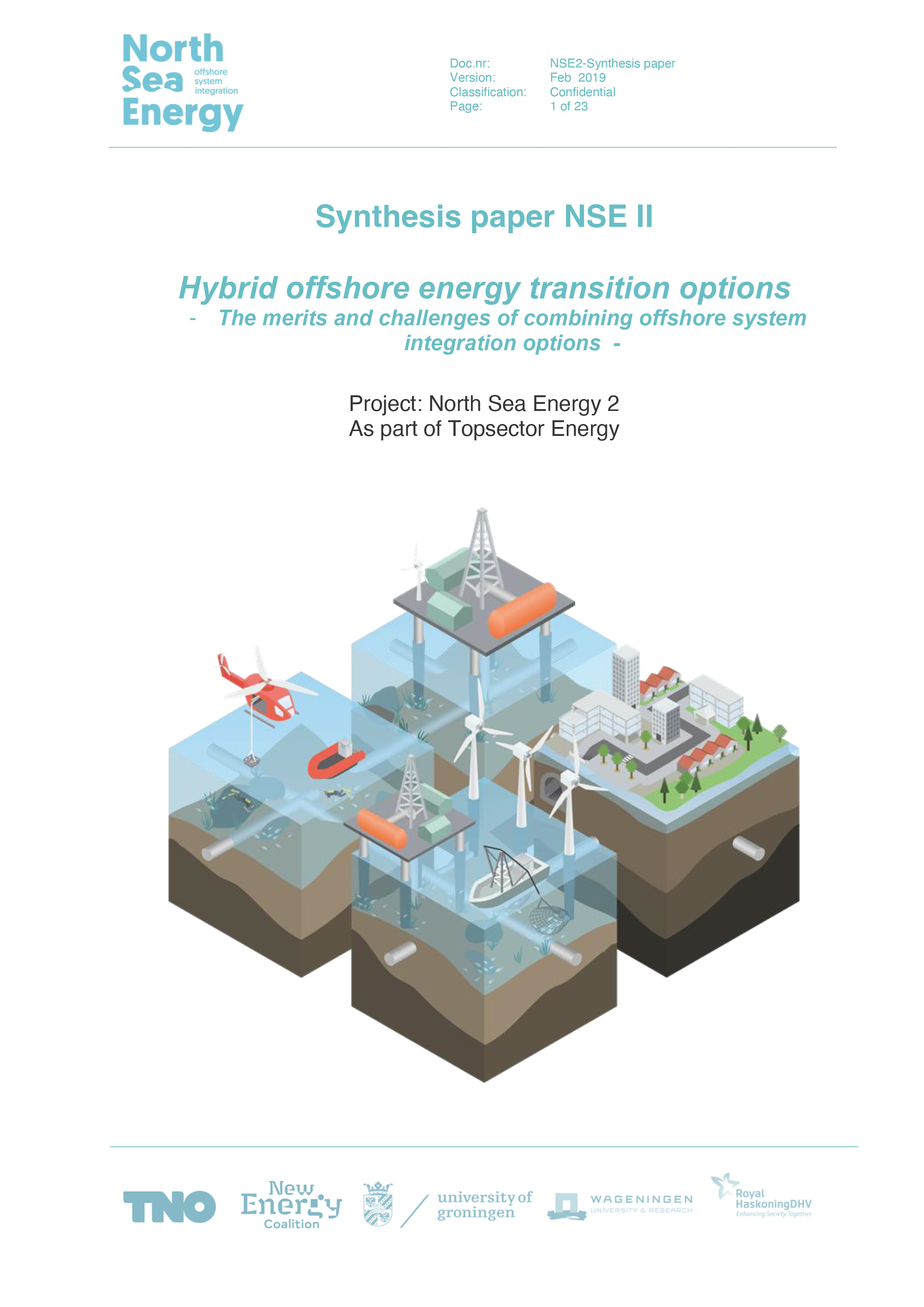
Synthesis paper NSE II — Hybrid offshore energy transition options: The merits and challenges of combining offshore system integration options
Offshore system integration is presented as a way to address two major North Sea challenges at once: rapid offshore wind growth and the release of oil and gas infrastructure. The synthesis brings together insights on platform electrification, power-to-hydrogen, CCS, reuse, environmental effects and regulation. Its value lies in combination: individual options are interesting, but sequential or parallel deployment can reduce costs, limit grid congestion and accelerate the energy transition.
Regulatory Framework: Barriers or Drivers for Offshore System Integration
Legal frameworks can accelerate offshore system integration, but they can also slow it down. The analysis examines platform electrification, offshore power-to-gas and CO₂ storage under international law of the sea, Dutch offshore law, licensing, cables, pipelines and decommissioning. The central issue is reuse: existing platforms and pipelines do not automatically fit rules designed for separate activities. Timing, ownership, licence transfer and grid connection become as important as technology.
Screening impacts of offshore infrastructures on marine species groups: a North Sea case study for system integration
Ecological risks of reusing offshore infrastructure are systematically screened for benthos, fish, birds and marine mammals. The study compares conventional gas production with platform electrification, CCS, green hydrogen production and decommissioning. A total of 855 effect chains are assessed semi-quantitatively. The main finding is nuanced: transition phases can have relatively high but short-lived effects, while reuse for CCS and hydrogen is expected to have relatively low potential impact on the species groups studied.
Strategic Assessment of Environmental Impacts of Offshore system Integration Options
Environmental impacts of platform electrification, CO₂ transport and storage, and green hydrogen production are assessed at strategic level for the K5, K14 and P15-P18 case study areas. The analysis covers nature, seabed, water quality, underwater sound, emissions, electromagnetic fields, materials, landscape, archaeology, safety and other spatial uses. It is not a formal SEA, but gives early insight into potential effects, knowledge gaps and permitting issues before projects become concrete.
2017
In the first phase of of our program we took the integrated approach of 4 offshore energy functions as the starting point for our research: green hydrogen production and CO₂ storage as potential routes to connect offshore wind with existing oil and gas infrastructure.
Towards sustainable energy production on the North Sea — Green hydrogen production and CO₂ storage: onshore or offshore?
Green hydrogen production and CO₂ storage are calculated as potential routes to connect offshore wind with existing oil and gas infrastructure. The study compares electrolysis on platforms, hybrid delivery of electricity and hydrogen, electrolysis in or on wind turbines, and steam reforming with CCS onshore or offshore. The conclusion is sharp: business cases can become attractive, but only if grid savings, CO₂ prices, CAPEX reductions and policy incentives are properly included.
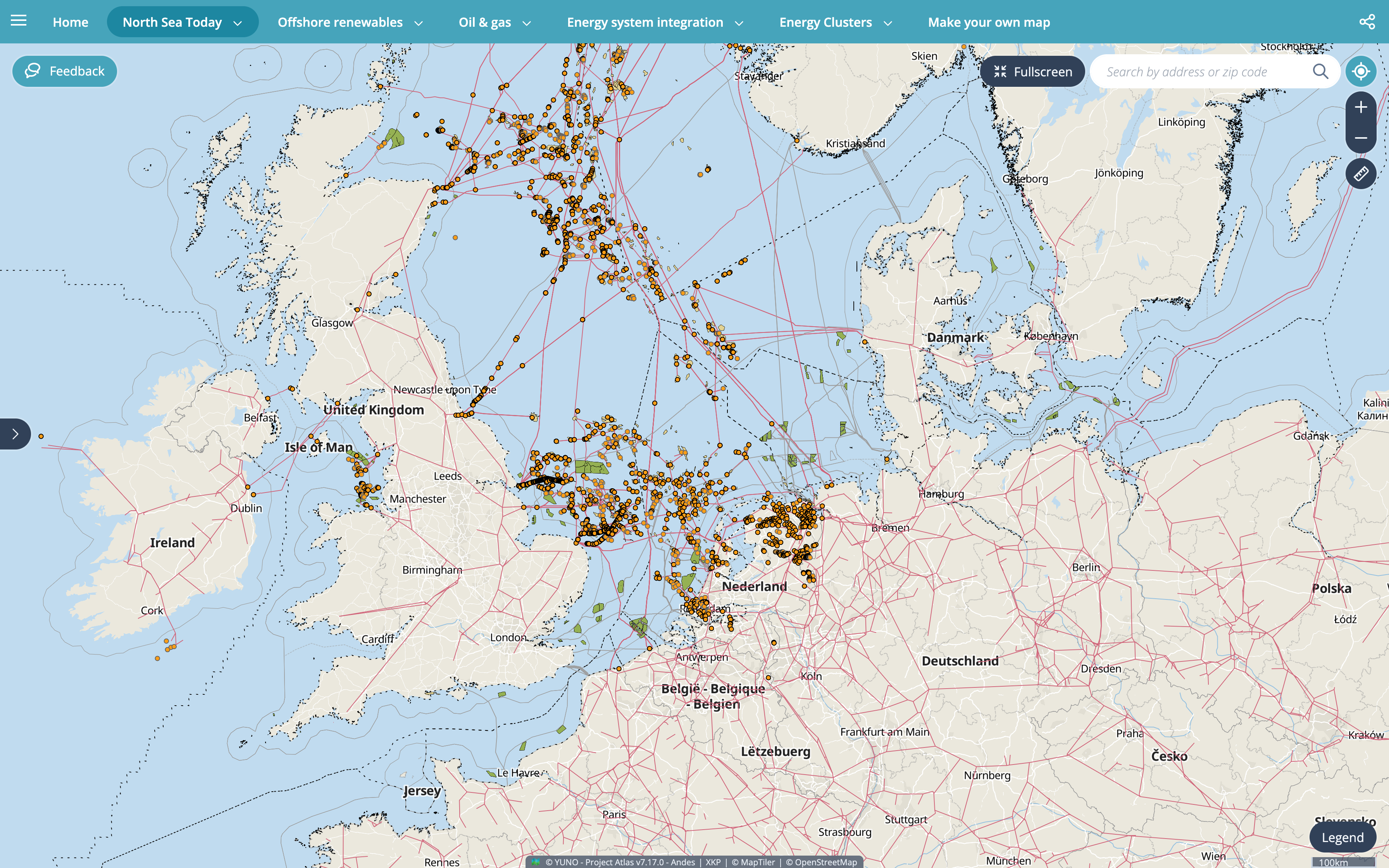
Make Your Own Map
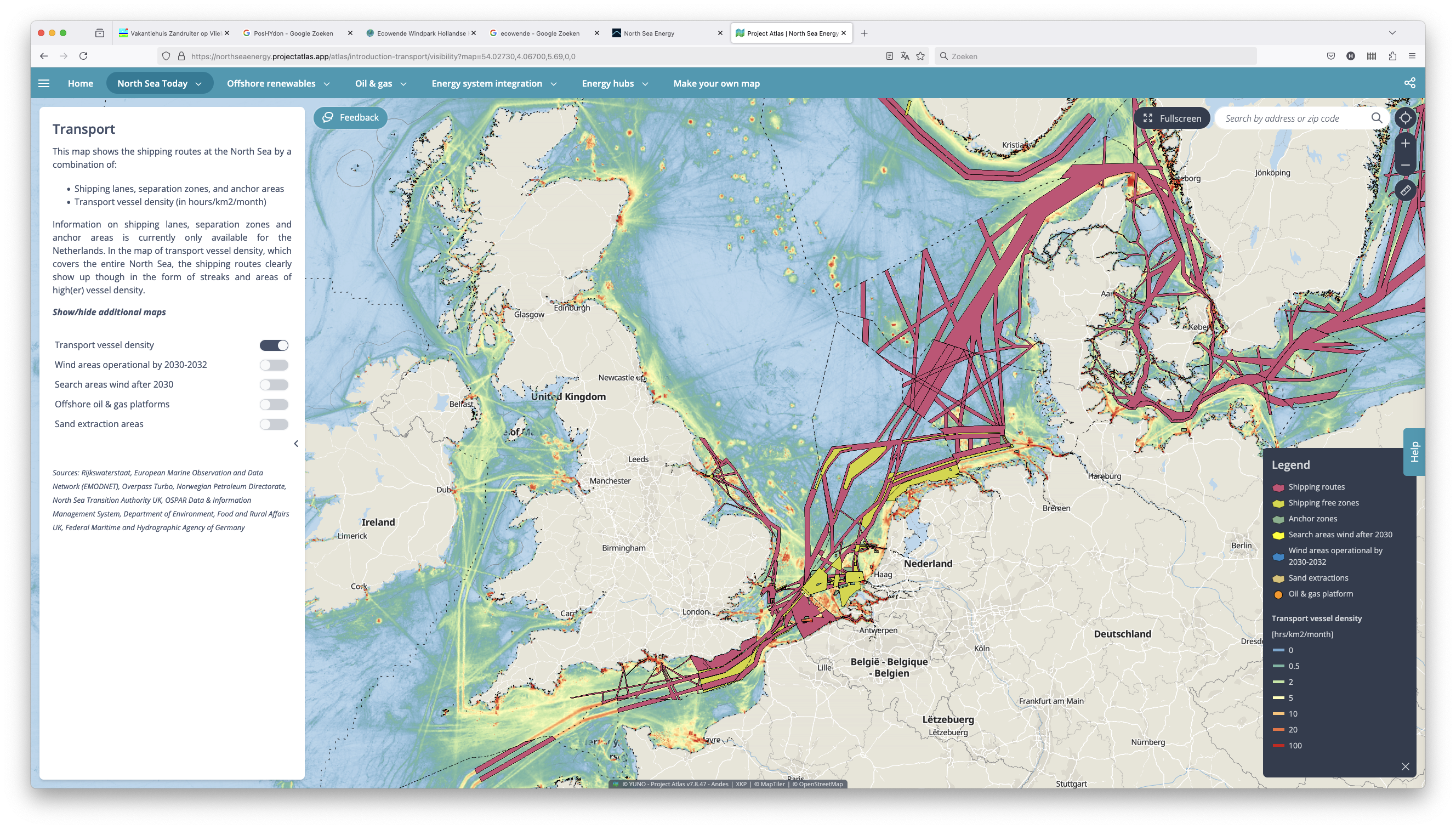
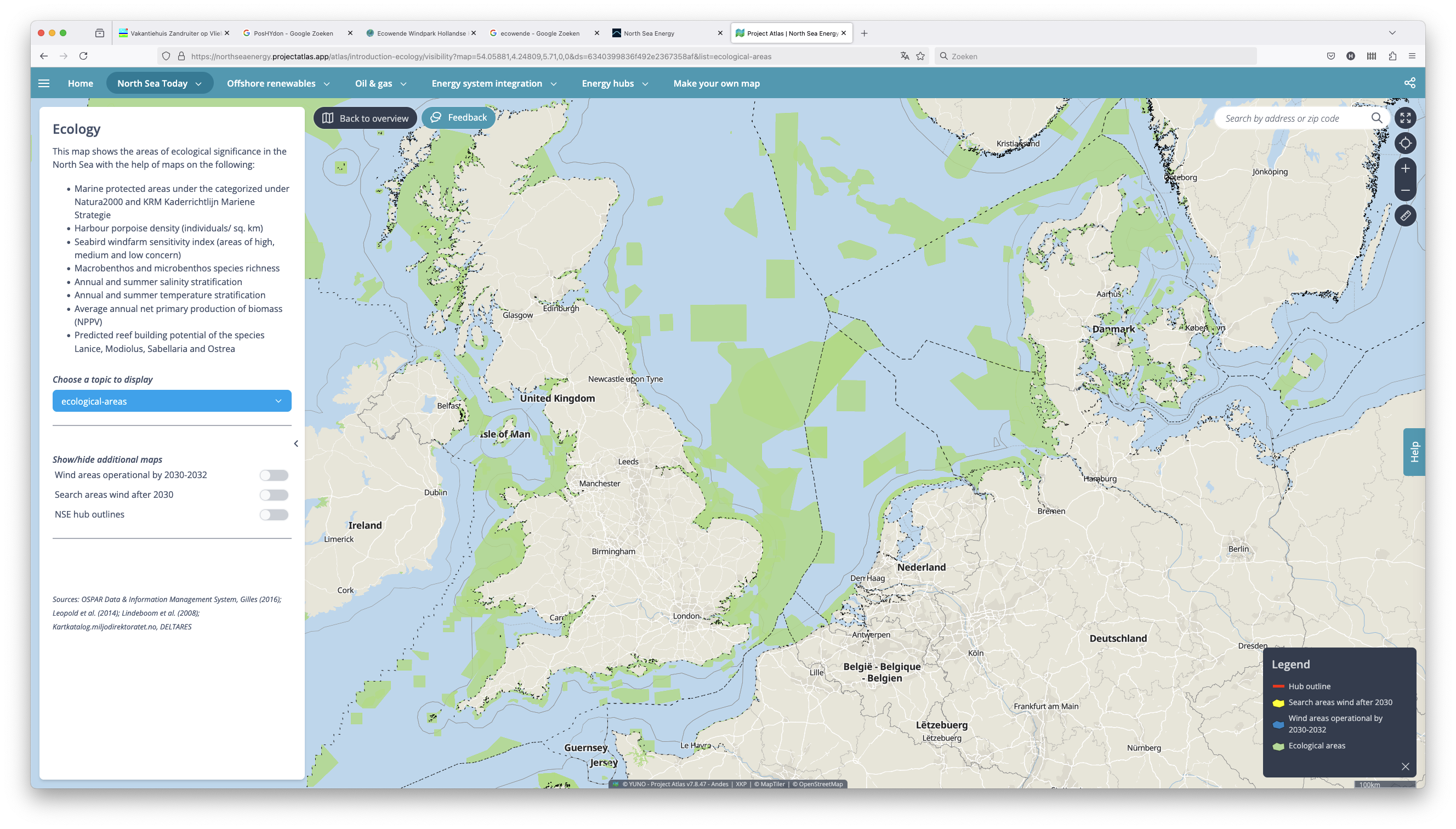
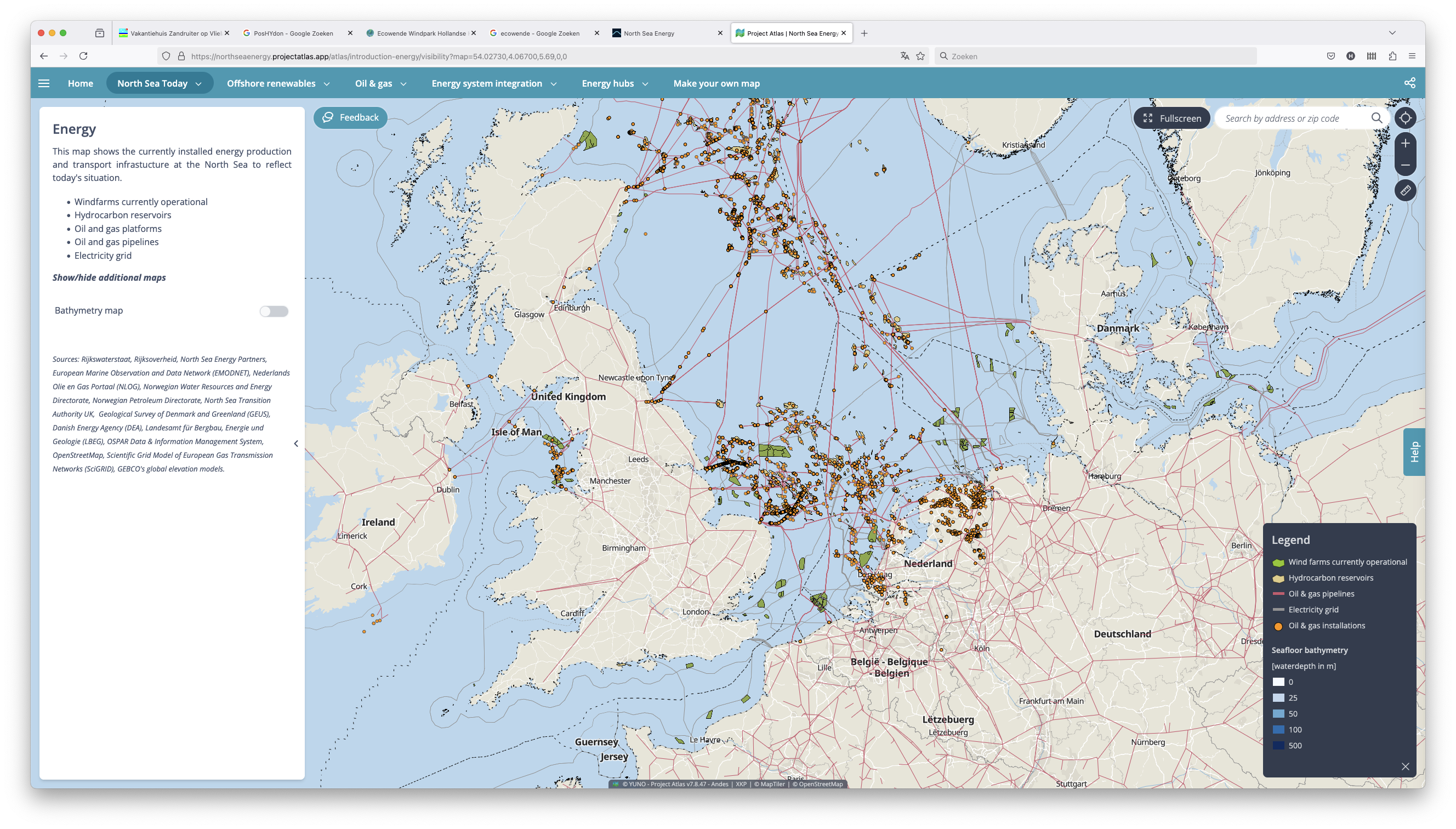
You can create your own maps and explore your own scenario's in the International North Sea Energy Atlas. You'll get a comprehensive overview of key activities in the North Sea related to energy, transport, ecology, fisheries, and defense.
Get insights into current energy flows from oil and gas production to offshore wind energy, while also visualizing future developments in our offshore energy system.
The atlas highlights: planned wind energy expansion, electrification of platforms, hydrogen infrastructure, CO₂ storage potential, synergistic energy hubs.
Stay up to date on the latest news
New research, insights and developments around the North Sea energy transition are constantly emerging. Get the most relevant updates from North Sea Energy delivered to your inbox.
Sign up for updates